Tokens
Tokens are digital assets on a blockchain that can be categorized as fungible, non-fungible, utility, security, governance, or stablecoins, each serving distinct purposes in digital ecosystems.
Fungible and Non-Fungible Tokens
Fungible Tokens (FTs)
These tokens are interchangeable and have equal value within their class. Examples include cryptocurrencies like Bitcoin (BTC) or Ethereum (ETH), where one unit is equivalent to another. Fungible tokens are widely used for transactions, investments, and as a medium of exchange in blockchain ecosystems.
Non-Fungible Tokens (NFTs)
NFTs are unique and indivisible, representing specific assets such as digital art, collectibles, or tokenized real estate. Each NFT has distinct characteristics, making it non-interchangeable with another token of the same class.
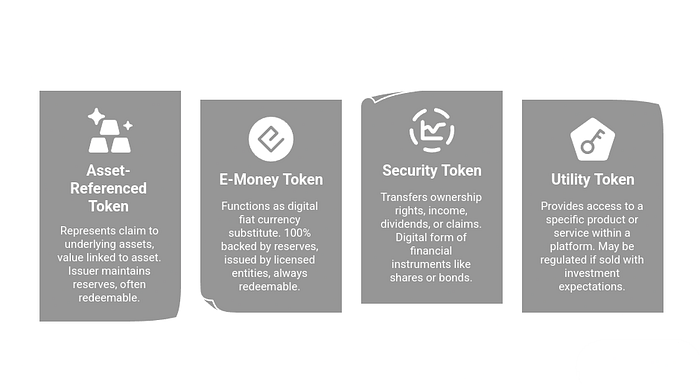
Utility Tokens
Utility tokens provide access to a product or service within a blockchain ecosystem. They are often used to power decentralized applications (dApps) or incentivize user participation.
Security Tokens
Security tokens represent ownership in an asset, such as equity, debt, or revenue-sharing agreements. They are regulated and often provide investors with rights similar to traditional securities, including dividends or voting rights.
Governance Tokens
Governance tokens allow holders to participate in decision-making processes within a blockchain protocol or decentralized application. They enable voting on proposals, protocol upgrades, or changes to the network. Examples include Maker (MKR) and Compound (COMP)
Stablecoins
Stablecoins are designed to maintain a stable value, often pegged to fiat currencies or other assets. They reduce volatility and are commonly used for trading, remittances, or as a store of value. Examples include Tether (USDT), USD Coin (USDC), and crypto-collateralized stablecoins like DAI.
Other Token Types
Meme Coins
Tokens created primarily for entertainment or community purposes, often highly speculative.
Work Tokens
A subset of utility tokens that require staking or participation to generate rewards, such as Augur’s REP or Keep Network’s KEEP.
Tokens can also be classified by their blockchain standards, such as ERC-20 for fungible tokens, ERC-721 for NFTs, and ERC-1155 for hybrid tokens that support both fungible and non-fungible assets. Each type serves a specific function, from facilitating transactions to representing ownership or enabling governance in decentralized networks.